Showing posts with label SART. Show all posts

Sunday, October 7, 2012

New Advances in Infertility

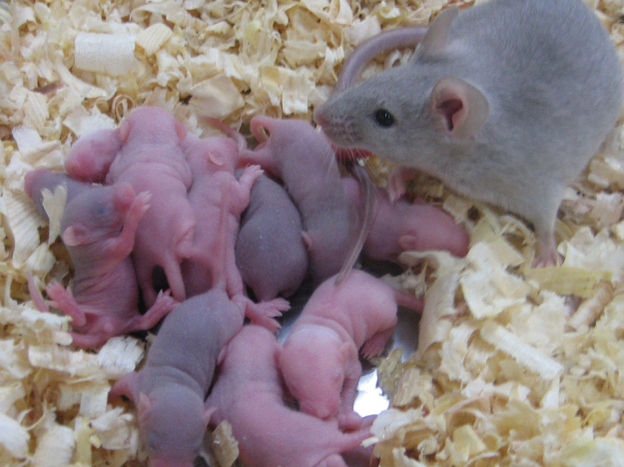
Each of these mouse pups was born from an egg scientists created using embryonic stem cells. 
On thursday, NPR had a fascinating story on a breakthrough discovery for infertility. Even more fascinating  they did it with induced pluripotent stem cells (as opposed to the controversial embryonic stem cells). If they can do it for women, then not only will it reduce/eliminate the biological clock worry, but also provide a solution for the dreaded "unexplained infertility" diagnosis that plagues so many women. This will be a game changer for future generations of infertile women. There are even great implications for men with sperm issues, as well  as the many hurdles faced by the LGBT community.

Alas, this will not apply to many of us currently in the throes of infertility. All is not lost. Many doctors are currently working on various cell technologies that apply to infertility. Autologous Endometrial Coculture is one example of a technology promising encouraging results. What does all that fancy wording mean? The short of is that they take cells from the lining of a woman's uterus and use them as a more natural environment for fertilized eggs than the previous methods. Studies have shown that in certain cases embryo development is improved, as are IVF success rates.

Dr. Patel's clinic in India is working with a similar concept: certain clients can qualify for the case study in which natural cells from the IVF patient are used to surround the egg pre-fertilization. They are seeing an increase in fertilized eggs and while it's too early to determine if this results in actual healthy babies born, I can say I was very impressed to learn that 3 out of 4 of my eggs were fertilized with this method. There is more to this method than I am [purposely] describing, but that is better left to the professionals or perhaps, when I can be less emotionally attached to the subject matter.

I have no idea if this will help the quality of my eggs/embryos in the long run, but it is still very exciting. My first cycle ended up with 2 eggs and only 1 of those fertilized. That 1 egg took over 24 hours to fertilize. On my second cycle (with the new protocol) I had 4 eggs extracted and out of those 3 fertilized. Like my first cycle, one of those was a late bloomer, but maybe it's the one implanted now and thus causing a lower hcg. Apparently my case is not an anomaly as the Akanksha Infertility Clinic is seeing really encouraging results with women that qualify for the case study. Even if it doesn't work for me, I will be really excited if this helps improve success rates for women in general.

Science is so cool. 

Thursday, March 29, 2012

Book learnin'

Started reading IVF: A Patient's Guide, by Rebecca Matthews PhD. In Chapter 1 I have already found at least 1 error (possibly two)* and that is a little frustrating. Also the constant mentioning of how crappy my chances are since I am older is a bit depressing, but all in all, still like the book. I like that's it's written from a factual standpoint, which even with the depressing crap, I can appreciate. Give it to me straight doc. I'll give my full review once I am complete.


If you are similar and like data / academic reading, then run to your nearest college and see if the library will let you have access to the periodical: Fertility and Sterility. Fascinating stuff in there! If your local college library (or local library???) doesn't have it available, then I suggest buddying up with some professor types. They can usually access the articles free of charge online. Otherwise, the individual articles are pretty expensive. I think the first one I looked at was $35. FOR ONE ARTICLE!!! Fortunately I have the hook-up. :-)

 Do you have any favorite books or articles that you found helpful? How about websites. Feel free to share them in the comment section.

--------------------------------------------------------------------------------------------------------
*Error(s): Page 6 lists the SART data from 2008 with regards to pregnancy success rates. The rows labeled "Percentage of pregnancies with twins" and "Percentage of pregnancies with triplets or more" are inverted. I knew this instantly because I have combed over SART statistics and went back to verify after reading this. If someone did not know this, then the erroneous percentages for triplets could be QUITE shocking.
The second possible error rate is on page 9 in the sentence "...the triplet rate should be low (less than 10% and closer to 5%)...". While technically this is correct, in my observation of triplet rates, I noticed numbers that hovered more between 1-3.5%. Unless my memory is wrong OR I am completely misreading something. (Not unheard of.) 

Wednesday, March 28, 2012

Monday's meeting - better than expected

Just getting around to updating on Monday's meeting with our [wonderful] doctor here in Atlanta. I'm feeling lazy, but I don't want to procrastinate in writing this so - presto! - I'm going to just copy what I wrote to my mom yesterday.

The doctor said she "had" to tell me that the one bad test (FSH) does statistically lower our chances, but that all the doctors still felt I was a very viable candidate when viewed with my other test scores. (Sound like I'm in school.)  Technically my FSH isn't really even THAT bad, but slightly higher than they would prefer. They wanted it under 11 and it was 12.4. At a level of 20, they advise against a woman proceeding with her own eggs. <9 is optimal. It can fluxuate from month to month (and always fluxs during your menstrual cycle), but they try to look at it from a perspective of your highest reading at the beginning of your cycle (day 2 or 3). Stress and such may be a contributing factor for your body producing higher levels (they just aren't really sure what all may be factors). 

That made me feel better because I'm guessing with their sharp increase of success rate in older women for 2010 (over previous years and higher than the national average) I was worried that they would consider me as too risky a candidate. It says a lot that they would still be confident with me as a lot plays into their SART scores. Having a higher success rate for women 38and up will certainly get them mentioned in Top 10 lists for magazines and such. So it was nice that she was still really confident regarding my chances. 

I asked her about what the nurse said regarding freezing embryos now, and she said that she didn't feel it was an immediate concern. If we found a surrogate and were able to do a cycle in a few months and THAT one wasn't successful, THEN she would advise that we consider it. She is such a nice and professional doctor; I wish all my doctors were as great as her. 

After doing some research with published papers, I noticed that my scores are a bit of an odditity. Specifically, that most women that have higher FSH scores usually have bad other scores. They even have a lot of cases where women with normal FSH scores are falsely masking a problem, but the other scores shed light on what is called "falsely suppressed FSH."  In my case (an AMH score in the normal range but an FSH that is elevated) only 5% of all cases are like that. Therefore, there is not enough research to give good statistics that the higher FSH will be a problem. Add to the fact that I had the cryoablation (also an extremely small sample size of women that go the IVF route) and I guess it is anyone's guess. I halfway wonder if the missing uterine lining has an effect on pituitary gland trying to create more FSH. I should have asked the doctor the other day, but I forgot. 

My mom cracked me up with the beginning line to her response:Well, it sounded like you were talking in a different language there, but I got the gist, that you weren't perfect, but good to go.

Moms are awesome like that. It totally made me realize how much info I have learned in such a short time. Now that I think about it, that gives me a much needed confidence boost in a time where I definitely need all the help I can get.

Monday, March 19, 2012

Stats! need stats, stat!

Where we are right now: we knew from the beginning that we would have to go the IVF/surrogacy route (more on that later), but late last year we were given some hope that I may be able to carry a baby. Several tests and renewed hope/worries, we were told a few weeks ago "that ain't gonna happen". Ok fine. Back to square one. What we were not prepared for was the cost... After much research I had to inform my husband that the possibility this could easily go over 6 figures, was very real. Not to mention costs if something medically went wrong with the gestational carrier (new code word for surrogate) and she doesn't have insurance. I'm guessing most won't.  (All of this lead to my idea of surrogacy in India, but I will save that post for a later day.)

Here is a tiny shred of info about us: 
My stats - 40 years old, Caucasian, good BMI of around 22, generally a healthy eater, exercise semi-regular, semi-weird health issues over the years with nothing serious.
DH - 40 years old, Indian, mid-range BMI for male, generally a healthy eater, exercise semi-regular, no known health issues.

Current state of basic tests:
His tests showed good count, with a little slowness.
My tests showed an AMH of 1.7 (normal range), FSH of 12.4 (GAH!), and 16 follicles (yay). (Stay tuned for my rant on confusing AMH numbers...)

I honestly expected a much lower FSH and the news hit me hard. The news of 16 follicles earlier that day was probably the one thing that didn't make me crumble in a pile of tears. Just kinda stone-faced for a few hours. I'm hoping that the HUGE amount of stress I have been dealing with lately (tremendous stress at job, followed by loss of job, car accident, worrying about money, worrying about this whole IVF/Surrogacy thing, blah blah blah) may have had some affect and that with proper stress reducers, followed by a few lifestyle changes (no alcohol, cut way back on caffeine, muti-vitamins, baby aspirin, avoid toxins, etc) that this will help.

The logical side of me worries because I saw a blurb on the interwebs that some doctors believe your highest FSH is where you are at no matter if it fluctuates later, but the hopeful side of me reminds me that all of this is not known yet and thus doctors can not have an absolute certainty of what may or may not help. Besides, the article very vaguely stated "some doctors believe..." with no facts or numbers to back it up. Plus, I tend to be the girl that doctors say how unique my situation is. With everything. Want proof?  My normal AMH combined with my FSH puts me at less than 5% of cases of a study that was about AMH and FSH numbers combined. When looking at SART reasons for infertility, my medical issue of why I can't carry a baby has me at less 2% of the population that goes to infertility clinics. Essentially, it means I really don't have a lot of stats I can lean on at the moment to gauge what our success will be.

Our US doctor will be calling me later to either "discuss the results from last week" or "schedule an appointment to discuss the results from last week". Not sure which since the lady on the phone (when I was driving no less), gave me the info and I honestly did not hear much after "FSH 12.4" and "doctor team will discuss internally at their meeting on Monday". We are in the process of talking with several clinics in India as well and will see how that goes. On SART, our clinic had an over 30% success rate with women my age last reporting period (2010). This statistically significant enough that it will make them stand-out, but it also makes me wonder if they skew what they advise. As in "you really need to use donor eggs" instead of what might be a perfectly normal range of odds for my age.

Sigh. I told you I over-think things.